Welcome to my Private Peacock's Breeding Farms!

Selamat Datang ke Laman Ladang Penternakan Merak. Membiak beberapa spesis unggas seperti Burung Merak , Kuang, Ayam Mutiara, Ayam Piru, Angsa, Itik , Silkie, Polish, Button Quail, Coachin dll.

Sunday, October 3, 2010

NEW!! White Peafowl baru masuk ke MPF

2 ekor betina white peafowl. baka import dari US
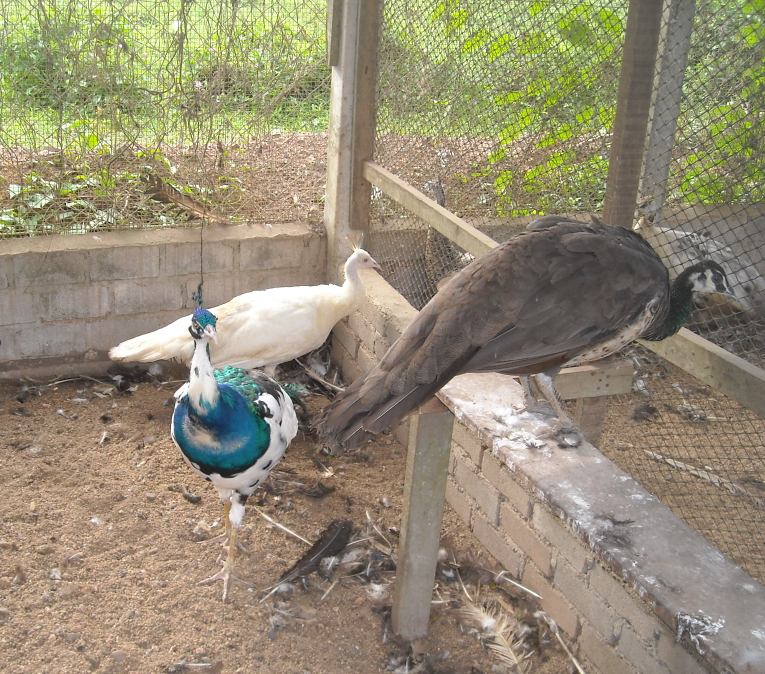
sepasang, 1 jantan (yg depan) 1 betina (belakang). baka US
Baka US.
Baka US.
anak berumur 8 bulan, gambar agak kabur sebab diambil dari jauh. kelihatan sedang merayau di tepi sawah disebelah dgn sangkar. baka biak tempatan.
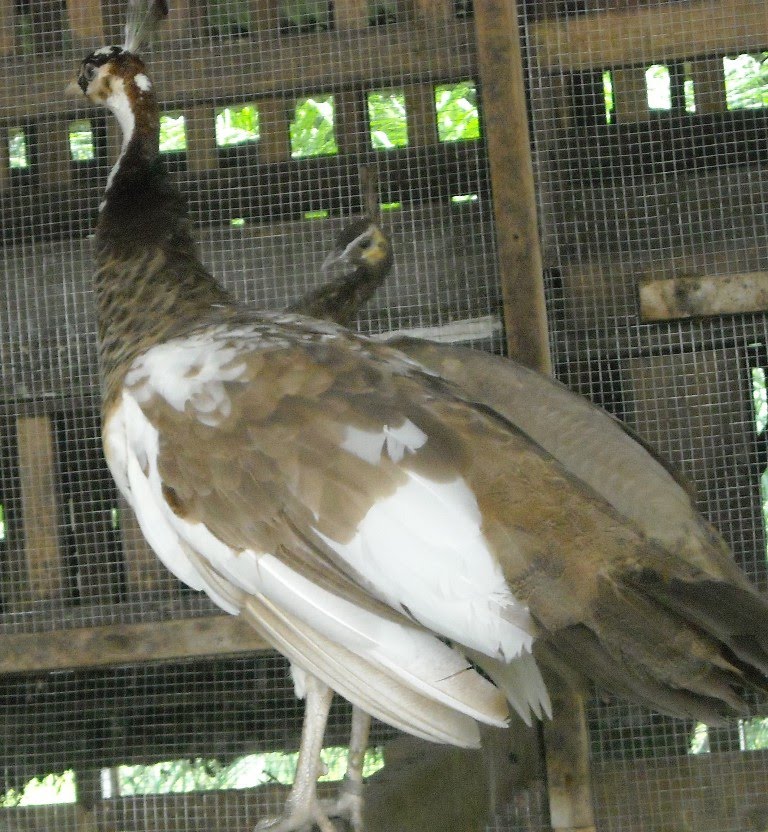
Seekor betina putih matang. pun baru tiba di MPF. baka biak tempatan.

Baru-baru ini saya menambah koleksi 'White Peafowl' ke MPF dengan membeli 5 ekor lagi. trio (1 jantan dan 2 betina) baka yang diimport dari US dan 1 betina dan 1 anak dari tempatan.

Sedikit maklumat tentang 'White Peafowl'
sumber: http://peacockgirl.tripod.com/Peafowl_Variet/Whitex.html


Type of mutation: The white is a color mutation, and although it can carry other genes, such as the blackshoulder and white-eyed, they are not visible because of its completely white color.

Peacock Coloration: Males are, as their name implies, completely white. Faint eyespots can be distinguished in the train by a thin layer of off white that surrounds the ocelli. The actual seeing eyes of the birds are blue.

Peahen Coloration: Hens are completely white, with blue eyes.

Peachick Coloration: When first hatched, the chick is yellow in color with white wings. White chicks are hard to sex until about two years of age when the male will developed wispy tail coverts, because the bird does not change color much in its lifetime, and the male and female look so similar. Chicks born at the same time can sometimes be sexed by the length of their legs. Males often have longer legs than the females.

Origin: It is speculated there may be a few white peafowl bred naturally in India. White was one of the first variations to be discovered and made popular, and has been around for many years.

Do they breed true?: Yes, white bred to white will produce 100% white chicks. White is an incomplete dominant gene, so when a white is bred to a non-white the offspring will be split to white, and this will show itself by small white patches on its primary wing feathers.

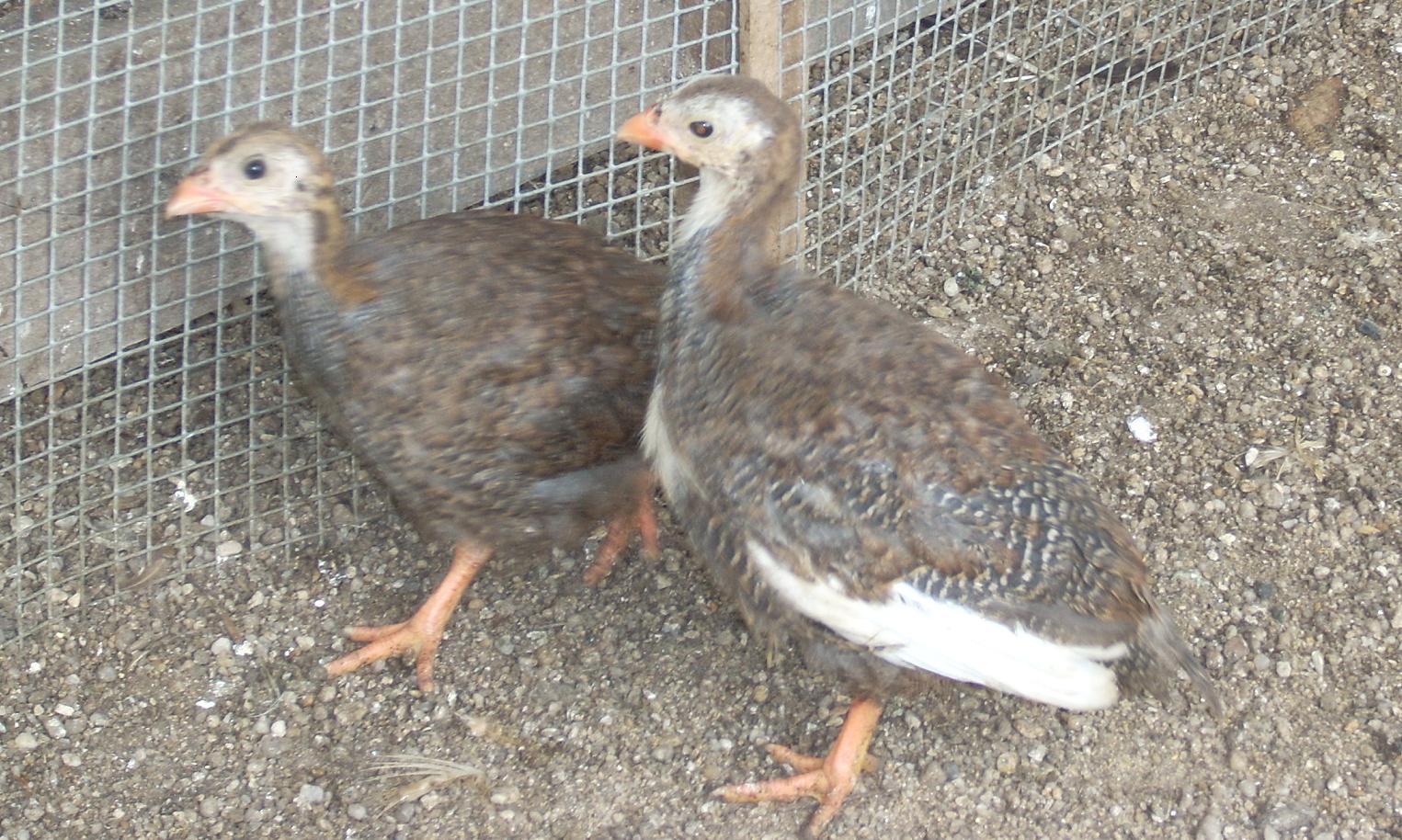
Pied Guinea Fowl

terima kasih kapada saudara makarimi n ibrahim (dangaupoultryfarm) atas pemberian pied guinea fowl nie, bagi masa ramadhan yang lepas masih lagi kecik molek, skang dah besar sikit..

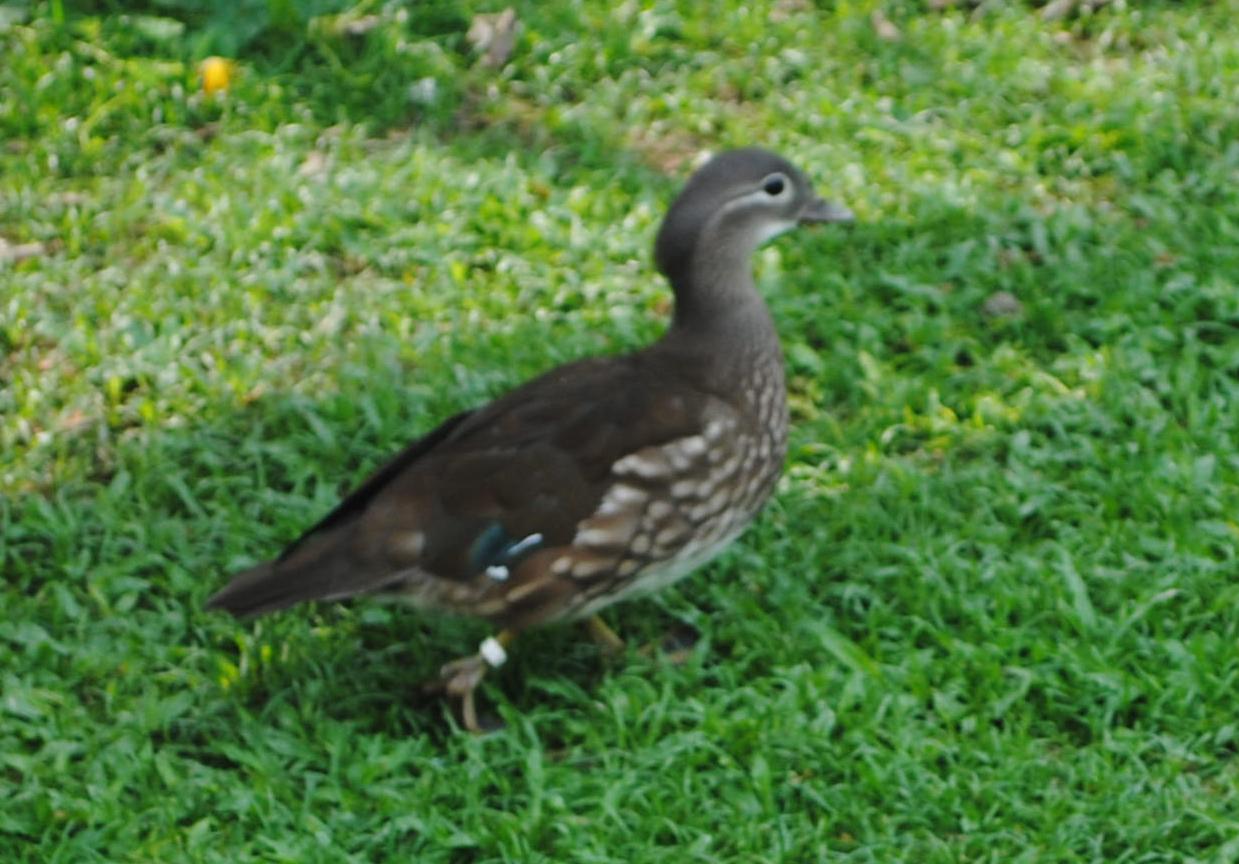
Mandarin Duck

Alhamdulillah, akhirnya tercapai hasrat untuk memiliki mandarin duck, saya ada membeli 1 jantan dan dua betina, sepasang mandarin duck dah menjejak ke MPF, lagi seekor betina masih tak ambil lagi. cage baru tgh buat khas utk diorang nie, nak tambah kolam n etc.. teringat kata-kata cikgu irwan fahmy, walaupun ada air kolam, air minum tetap kena sediakan sebabnya itik nie takkan minum air yang dia mandi..


seekor lagi belum diambil, gambar je snap dulu. maybe after hilux dah siap repair baru g ambil.

Sedikit maklumat tentang mandarin duck
sumber: wikipedia

The Mandarin Duck (Aix galericulata), or just Mandarin, is a medium-sized perching duck, closely related to the North American Wood Duck. It is 41–49 cm long with a 65–75 cm wingspan.

The adult male is a striking and unmistakable bird. It has a red bill, large white crescent above the eye and reddish face and "whiskers". The breast is purple with two vertical white bars, and the flanks ruddy, with two orange "sails" at the back. The female is similar to female Wood Duck, with a white eye-ring and stripe running back from the eye, but is paler below, has a small white flank stripe, and a pale tip to its bill.

Unlike other species of ducks, most Mandarin drakes reunite with the hens they mated with along with their offsprings after the eggs have hatched and even share scout duties in watching the ducklings closely.However, even with both parents securing the ducklings, most of them do not survive to adulthood.

The species was once widespread in eastern Asia, but large-scale exports and the destruction of its forest habitat have reduced populations in eastern Russia and in China to below 1,000 pairs in each country; Japan, however, is thought to still hold some 5,000 pairs.

Specimens frequently escape from collections, and in the 20th century a feral population numbering about 1,000 pairs was established in Great Britain. Although this is of great conservational significance, the birds are not protected in the UK since the species is not native there. There is also a free-flying feral population of several hundred mandarins in Sonoma County, California. This population is the result of several mandarin ducks escaping from captivity, then going on to reproduce in the wild.

In the wild, Mandarin Ducks breed in densely wooded areas near shallow lakes, marshes or ponds. They nest in cavities in trees close to water and during the spring, the females lay their eggs in the tree's cavity after mating. The males take no part in the incubation, simply leaving the female to secure the eggs on her own. However, unlike other species of ducks, the male does not completely abandon the female, leaving only temporarily until the ducklings have hatched. Shortly after the ducklings hatch, their mother flies to the ground and coaxes the ducklings to leap from the nest. After all of the ducklings are out of the tree, they will follow their mother to a nearby body of water where they would usually encounter the father, who will rejoin the family and protect the ducklings with the mother. If the father isn't found then it is likely that he may have deceased during his temporary leave. The Asian populations are migratory, overwintering in lowland eastern China and southern Japan.

Mandarins feed by dabbling or walking on land. They mainly eat plants and seeds, especially beechmast. They feed mainly near dawn or dusk, perching in trees or on the ground during the day.

Mandarins may form small flocks in winter.

blue showing his first tail


tak lama lagi dah nak masuk musim 'mating' burng merak dan ekor sang jantan mula tumbuh semula, maklumla nak pikat sang betina nie kenala 'hensem', merak-merak jantan muda pun tak lepaskan peluang untuk menunjukkan ekor-ekor yang masih 'kontot' dan galaknya bukan main juga... gambar kat atas nie adalah gambar seekor indian blue muda berumur 2 thn setengah sedah belajar mengembang-ngembang ekor pertamanya... cantek! cantek! bro.. dah la tuee...

Lavender Silkie Chicken


Baru-baru nie MPF menambah koleksi ayam silkie, baru membeli silkie berwarna lavender dari saudara makarimi & Ibrahim.

Wednesday, September 1, 2010

Cameo Spalding and Purple Pied Peahens


Purple Pied Peahen


Cameo Spalding Peahen

-Telah dijual pada ramadhan yang lepas kepada En Suhaimi, Ozana Country Resort, Melaka
Related Posts Plugin for WordPress, Blogger...